2D1N vs 3D2N Halong Bay Cruise: Which Is Better for Indian Families?
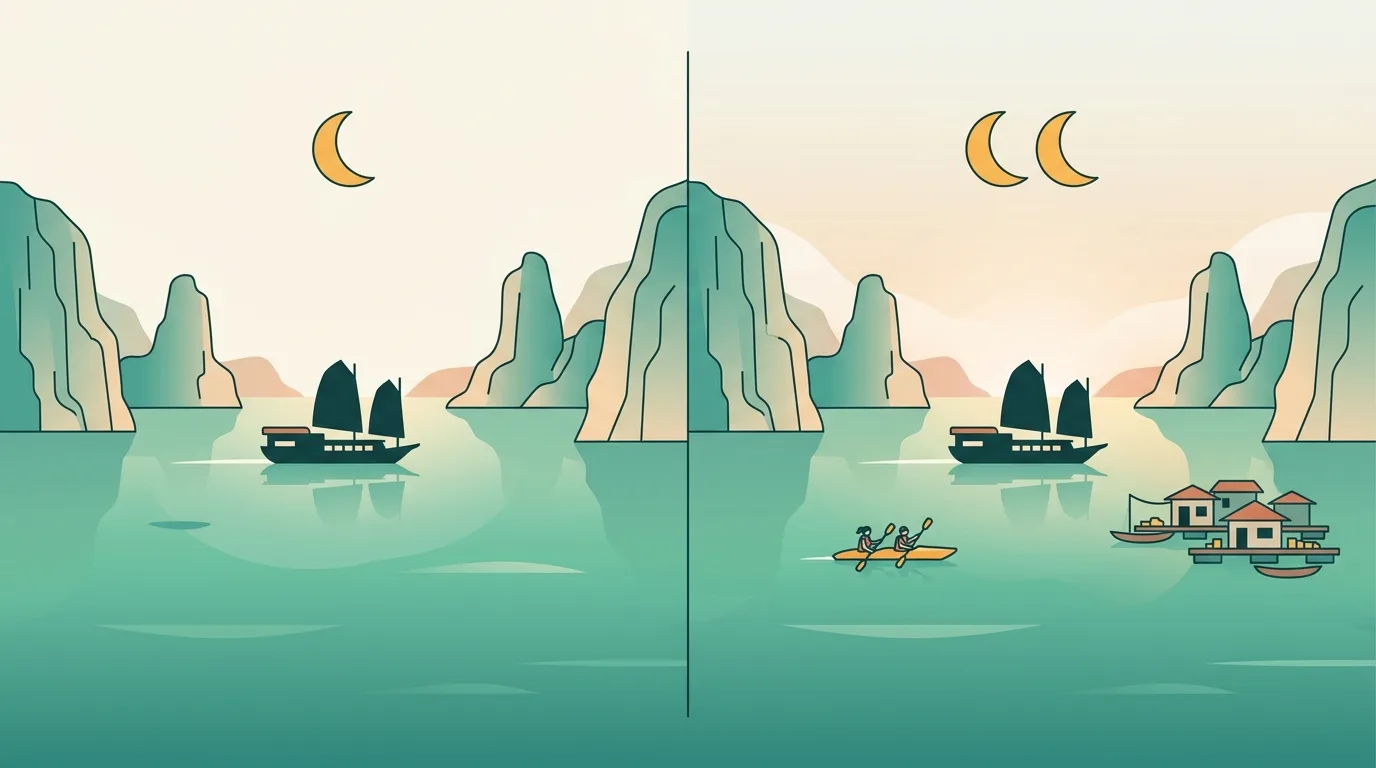
This is a different question from day-cruise-vs-overnight: that one is about whether you sleep on the boat at all. This one assumes you've already decided on an overnight cruise, and asks how many nights: one (2D1N) or two (3D2N). For a family managing vegetarian, Jain, or halal food needs, the answer isn't just about activities. It's also about how many meals you're asking the same kitchen to get right in a row.
Key Takeaways
- 2D1N covers the core Halong Bay experience in roughly 24 hours onboard: one lunch, one dinner, one breakfast, and the headline activities (kayaking, a cave visit, sunrise Tai Chi).
- 3D2N adds a full second day: more of Lan Ha Bay's quieter areas, an extra kayaking/swimming stop, sometimes a cooking class, plus two more meals from the same galley.
- For a family with dietary requirements, 3D2N means more opportunities for the kitchen to get it right consistently, but also more opportunities for fatigue to set in if the kitchen is only accommodating you as an exception rather than running a genuine Indian line.
What Each Itinerary Actually Covers
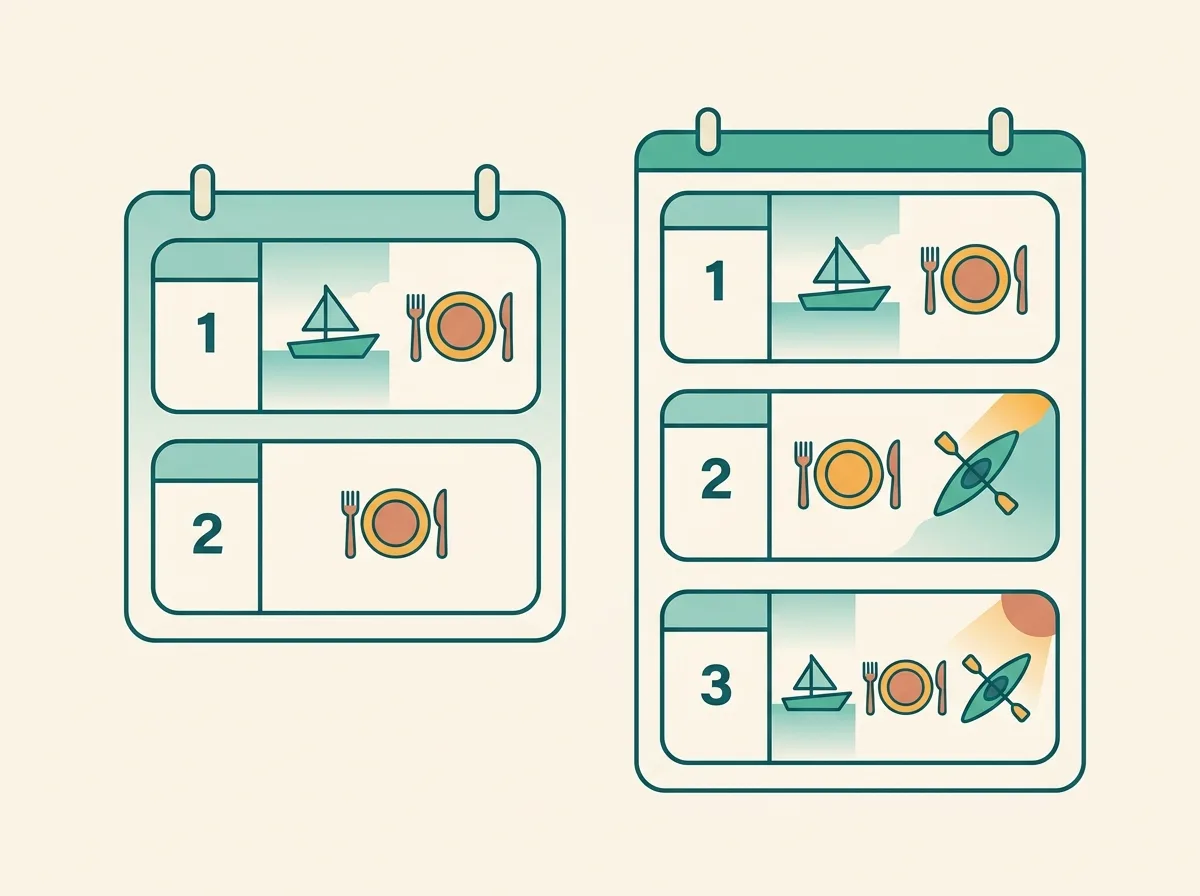
A 2D1N (two-day, one-night) cruise is the standard overnight format: board around midday, spend the afternoon on activities (kayaking at a bay inlet, a cave visit; Thien Canh Son Cave is a commonly featured stop), a sunset gathering, dinner, an evening on board, sunrise Tai Chi, breakfast, a final activity, and disembark by early afternoon the next day. Meals: one lunch, one dinner, one breakfast, three sittings for the kitchen to get right.
A 3D2N (three-day, two-night) cruise keeps that full first day and night, then adds a second full day before returning to port. That second day is typically deeper into Lan Ha Bay's quieter areas (many day-boats have already turned back by then), a village visit, more swimming or kayaking, and on some itineraries a Vietnamese cooking class. That's two more meals (lunch and dinner on the extra day), for five sittings total across the trip. This structure is described by Halong Bay Lux Cruises (retrieved 2026-09-24) for one specific operator's itinerary; treat the exact activity list as illustrative, since it varies by operator, not as a universal schedule.
Meals and Dietary Coordination: What Changes
This is the part most duration-comparison content skips, and it matters more for this audience than for a general traveler:
- 2D1N = 3 meals from one kitchen. If you've confirmed your vegetarian, Jain, or halal request in writing (see our notice-period guide), three sittings is a manageable ask even for a kitchen accommodating you as an exception rather than running a dedicated Indian or halal line.
- 3D2N = 5 meals from one kitchen. Cross-contamination risk doesn't compound with more meals: each sitting is its own risk, not a cumulative one. But menu variety does become harder over five sittings than three. A kitchen with genuine capacity (see our roundup of cruises with an onboard Indian cook) can rotate dishes; a kitchen doing you a one-off favor is more likely to repeat the same dal-rice-sabzi combination five times running, which is a real but minor quality issue, not a safety one.
- Provisioning is fixed before departure either way. A 3D2N cruise's galley stocks for the whole trip at the dock, the same as a 2D1N cruise's, just for two extra meals. If an ingredient runs short, it runs short the same way regardless of duration.
None of this is a reason to default to the shorter trip. It's a reason to ask the same verification question either way: "what will you actually serve across all N meals," scaled to however many sittings you're booking.
Cost and Value
Industry-general guidance on Halong Bay pricing suggests the second night tends to cost proportionally less than the first, since fixed costs (transfer, boarding, cave/park fees) are already covered by the base itinerary. That makes 3D2N a better value per hour on board, not just per night (Halong Bay Lux Cruises, retrieved 2026-09-24). See our Indian-food price guide and budget vs. luxury comparison for how that plays out against operators specifically known for Indian food.
Comparison at a Glance
| 2D1N | 3D2N | |
|---|---|---|
| Meals to coordinate | 3 (lunch, dinner, breakfast) | 5 (adds a second lunch + dinner) |
| Core activities | Kayaking, one cave visit, sunset gathering, sunrise Tai Chi | All of 2D1N's, plus a second day deeper into Lan Ha Bay, often a village visit and/or cooking class |
| Crowd levels on day 2 | N/A (already disembarked) | Lower: many day-boats and 2D1N cruises have already turned back |
| Value per hour on board | Standard | Generally better: second night's fixed costs are already covered |
| Best for | First-time visitors, younger kids with shorter attention spans, strict-dietary travelers testing an operator for the first time | Travelers who've already confirmed the operator's kitchen handles multi-meal variety well, or who specifically want quieter, less-crowded areas of the bay |
Which Should Your Family Book?
For a family with young children or elderly members traveling for the first time with a specific dietary need, 2D1N is the lower-commitment option: three meals is a manageable test of whether an operator's kitchen actually delivers, and you're back on land sooner if it doesn't go well. For a family who has already confirmed a specific operator's kitchen can handle variety across multiple sittings, or who's booking a well-documented Indian-food specialist like Omkara or a certified-halal operator like Mon Chéri or Catherine, the extra day of 3D2N adds real value: quieter water, more activities, and (per the pricing pattern above) a better cost-per-hour outcome.
Either way, the decision that matters most isn't duration. It's whether you've verified the kitchen specifically, using our red flags checklist before you book either length of trip.
As a rough illustration: picture a family with a Jain grandmother traveling for the first time with an operator they haven't used before. Booking 2D1N first means the kitchen only has to get three sittings right before anyone commits to a second night. If it delivers, the same family can book 3D2N with a known-good kitchen on a future trip instead of hoping five sittings go as well as three.