Halong Bay Cruise with Indian Food: The Complete Guide for Indian Travelers (2026)
Which Halong Bay cruises actually serve real Indian, vegetarian, Jain, or halal food, compared honestly, with claims labeled verified vs. operator-only.

LABELED
HONESTLY
Find your guide by dietary need

The Complete Guide to Vegetarian & Jain Food on Halong Bay Cruises
Pure vegetarian and Jain food on Halong Bay cruises, explained honestly: notice periods, cross-contamination, what a real thali looks like, and which operators actually deliver.
Explore guide
Halal Food on Halong Bay Cruises: The Complete Guide for Muslim Travelers
What halal-certified actually means vs. halal-friendly on a Halong Bay cruise, which operators cover it, and what to verify before you book, honestly labeled claim by claim.
Explore guide
How to Choose a Halong Bay Cruise as an Indian Traveler: The Independent Guide
A neutral, criteria-based way to compare Halong Bay cruises for Indian food needs: not written by an operator trying to sell you their own package.
Explore guide
Vietnam Trip Planning Guide for Indian Travelers (2026): Itineraries, Visas, Food
How to plan a Vietnam trip from India that actually works: visa, timing, a realistic itinerary shape, and budget, with Halong Bay food logistics built in from the start.
Explore guide
If you're planning a Halong Bay cruise from India, there's one question that matters more than the itinerary: will you actually get to eat? Two days on a boat with no way to reach a restaurant is a real problem if the only food onboard is something you can't or won't eat, and every operator's marketing page says some version of "Indian food available," which isn't the same as telling you what that means in practice.
This guide answers that question directly. It compares what specific Halong Bay cruises actually offer for vegetarian, Jain, and halal travelers, how far in advance you need to arrange it, and what a realistic budget looks like, then links you into a full, dedicated guide for whichever dietary need is yours.
TL;DR: Yes, a growing number of Halong Bay cruises now serve genuine Indian food, from Ambassador Cruise's Indian-chef-led menus to Omkara Cruise's Indian-run kitchen. But "serves Indian food" ranges from a full onboard Indian chef to a single pre-arranged vegetarian dish. The right choice depends on your specific dietary need (pure veg, Jain, halal) and how much advance notice you give. This guide compares the main named options and explains what's independently verified versus operator-claimed, then links to our full vegetarian/Jain, halal, comparison, and trip-planning guides for the details.
Quick Answer: Which Halong Bay Cruises Actually Serve Indian Food?
Yes, several Halong Bay cruise operators offer genuine Indian food, but the depth of what's actually available varies a lot by operator, and no two competitor guides agree on the details because most of them are written by the operators themselves. Here's a neutral comparison of the options this guide is aware of, built specifically because none of the existing guides on this topic publish one:
| Operator | Food Offering (operator's own claim) | Cruise Format | Notice Period | Approx. Price Band | Source |
|---|---|---|---|---|---|
| Ambassador Cruise | Indian chef and Indian-style menus, marketed specifically to Indian travelers | Overnight, luxury | Not publicly specified, confirm directly before booking | Luxury tier | ambassadorcruise.com |
| Omkara Cruise | Indian vegetarian kitchen, operated in connection with an Indian restaurant brand | Overnight | Not publicly specified, confirm directly before booking | Mid-range | halongbaycruisedeals.com (product listing) |
| Halong Apollo Day Cruise | States it offers Jain meal options on request | Day cruise (no overnight) | Advance request required; exact window not publicly specified, confirm directly | Budget / day-trip tier | halongtourexpert.com |
| Paradise Elegance / Paradise Grand | Dedicated Indian-food and vegetarian-itinerary marketing pages | Overnight, luxury | Not publicly specified, confirm directly before booking | Luxury tier | paradisevietnam.com |
A note on how to read this table: every detail above is the operator's own public claim, gathered from their own websites and listings, not something this guide has independently confirmed yet with each operator directly. That verification (exact notice periods, kitchen setup, current pricing) is genuinely useful information this guide intends to build out over time. It's labeled as claimed-but-unverified here rather than presented as fact, because getting that distinction wrong is exactly the kind of mistake that leaves someone stuck without a meal they can eat. See our full independent comparison guide for named-operator reviews as they're completed, starting with Ambassador Cruise, Omkara Cruise, and Halong Apollo Day Cruise. For the full, regularly updated version of this comparison, see our dedicated roundup of Halong Bay cruises with an onboard Indian cook.
There's also a real difference between "genuine" and "accommodated" that the table doesn't fully capture, and it's worth understanding before you compare price tags. A genuine setup means the cruise runs an Indian-staffed kitchen line or an Indian chef alongside its regular kitchen, cooking Indian dishes as a matter of course rather than as an exception. An accommodated setup means the standard (usually Vietnamese) kitchen adds one or two Indian or vegetarian dishes to its regular menu when asked. Both can work well for a flexible eater. For a strict Jain or halal requirement, the difference matters a lot more. A kitchen that's accommodating you as an exception is more likely to make a mistake with shared pans, stock, or seasoning than one where Indian cooking is the default.
Format matters as much as the operator here. A day cruise only has to get one meal right, and if it goes wrong, you're back on land within hours. An overnight cruise has to get two or three meals right in a row, on a boat you can't leave, with a kitchen that can't easily restock mid-trip if it runs short of an ingredient. That's not a reason to avoid overnight cruises. Most trips go fine, but it's a reason to be more thorough about verification before booking one than you would be for a day trip. We go deeper on that tradeoff in the choosing the right cruise section below, and in our dedicated day-cruise-vs-overnight food comparison if that's specifically what you're deciding between. If you're budgeting, see how much Indian food actually adds to your cruise price before you compare quotes.
Does Halong Bay Actually Have Indian Food Cruises?
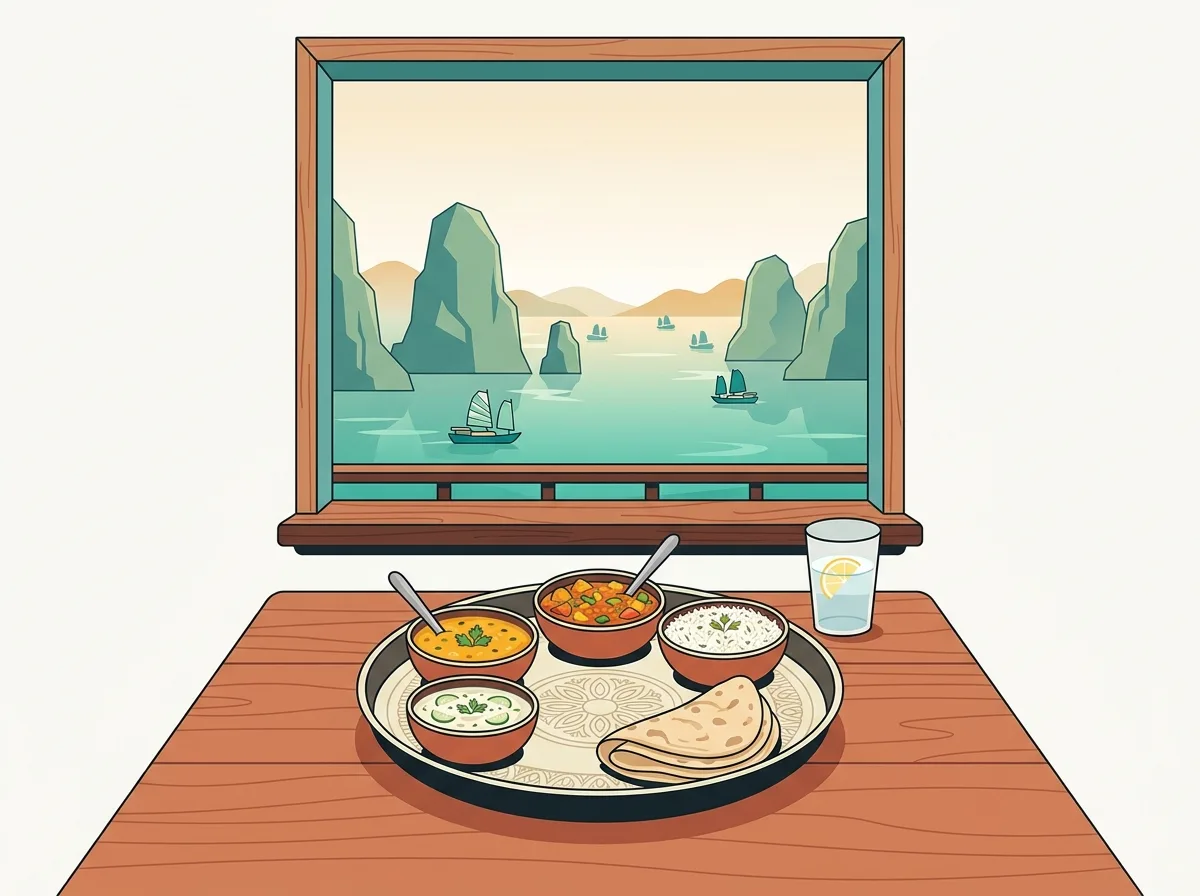
Yes, and the reason this niche exists at all is straightforward: Indian tourism to Vietnam has grown fast enough that cruise operators now compete for it directly. Indian arrivals to Vietnam rose from 392,000 in 2023 to roughly 507,000 in 2024 and approximately 746,000 in 2025, making India the country's sixth-largest source market by that point (VnExpress International, citing Vietnam National Tourism Administration data, retrieved 2026-09-23). Early 2026 data shows that growth continuing, with more than 324,000 Indian arrivals in the first four months of the year alone, a 35% year-over-year increase (same source).
That growth is why "Indian food on a Halong Bay cruise" now ranges from a fully Indian-run kitchen with a dedicated chef, to a single pre-arranged vegetarian dish added to an otherwise standard Vietnamese menu. Both get marketed as "Indian food available," which is technically true in both cases and practically very different. The rest of this guide is built to help you tell those two situations apart before you book, not after you're already on the boat.
Indian travelers to Vietnam also tend to stay longer and visit more than one destination per trip, an average of 5-7 days across multiple stops, not a single-city visit (VnExpress International, citing VNAT data, retrieved 2026-09-23). That pattern is part of why Halong Bay in particular has become a competitive market for this kind of accommodation: it's rarely a standalone trip, it's usually one leg of a Hanoi–Halong Bay–Da Nang or Hanoi–Halong Bay–Ho Chi Minh City itinerary, often booked through a travel agent handling the whole route. Operators that get the food question right have a real incentive to say so loudly, because agents booking for groups actively look for it.
In practice, "Indian-friendly" claims on a cruise operator's website fall into a few recognizable patterns. Some post a single photograph of a thali on their homepage and call it a feature. Others name a specific chef, describe a separate prep line, and publish sample menus. A few, like Omkara, build the entire product around an existing Indian restaurant brand rather than adding Indian dishes to an existing Vietnamese kitchen. None of those patterns is inherently wrong. A single well-executed accommodated dish can be entirely sufficient for a flexible eater, but they're different enough in practice that treating every "Indian food available" listing as equivalent is where most of the disappointment in this niche comes from.
Vegetarian & Jain Food on Halong Bay Cruises
If you eat pure vegetarian or Jain, the realistic picture is this: most established Halong Bay cruise operators can accommodate a vegetarian request if you give enough advance notice, but Jain requirements (no onion, no garlic, no root vegetables) need more specific confirmation, because it depends on the kitchen actually separating utensils and ingredients, not just leaving meat off the plate.
One Halong Bay cruise operator's own published guidance illustrates the kind of notice period you should expect to be asked for: their site states a standard vegetarian request needs about a week's notice, while a Jain request needs roughly two weeks, because it requires more kitchen-side preparation (Halong Bay Lux Cruises, retrieved 2026-09-23). Treat that as an illustrative example of typical timelines in this niche, not a universal rule, the actual number varies by operator, and it's exactly the kind of detail worth confirming directly before you book rather than assuming.
It helps to be specific about what each term actually excludes, since "vegetarian" gets used loosely and doesn't always mean the same thing to a Vietnamese kitchen as it does to an Indian traveler. Pure vegetarian, in the Indian sense, means no meat, no fish, and no egg, but a Western or Vietnamese menu labeled "vegetarian" may still include egg unless you specify otherwise. Jain food goes further: no onion, no garlic, and no root vegetables (potato, carrot, beetroot, and similar), because they're considered to involve harm to the plant when harvested. A kitchen that hasn't cooked Jain food before may not know this distinction exists at all, which is exactly why a vague "yes, vegetarian is fine" response from a booking agent isn't the same as a confirmed Jain accommodation.
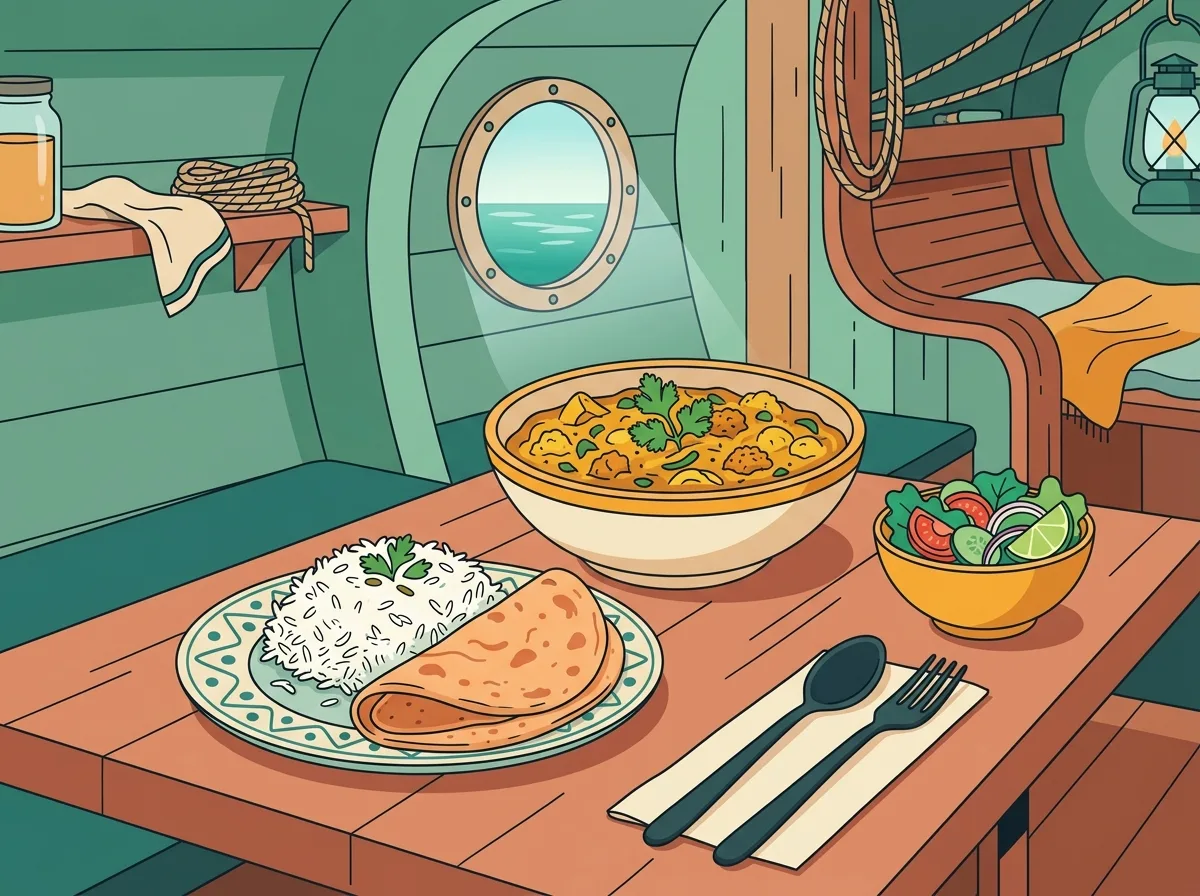
Cross-contamination is the detail vegetarian and Jain travelers most often don't think to ask about until it's too late, a kitchen can technically serve a "vegetarian" dish that was cooked in the same pan as meat, or a "Jain" dish that still used garlic-infused oil. Getting a real answer to that question, operator by operator, is exactly what our dedicated guide covers.
A request that gets a specific, useful response looks something like this: "We need pure vegetarian, Jain-style meals for two people, no onion, garlic, or root vegetables, and please confirm whether these will be prepared using separate utensils from non-vegetarian dishes." A useful reply names specific dishes (dal, rice, roti or chapati, a dry vegetable sabzi, plain curd are common defaults) and confirms the utensil question directly. A reply that just says "yes, we can arrange vegetarian food" without addressing either point is worth following up on before you rely on it.
Read our full guide: Vegetarian & Jain Food on Halong Bay Cruises → covers notice-period specifics by operator, how to word your request, what a real onboard thali looks like, and which cruises have an actual onboard Indian cook versus a single accommodated dish.
Halal Food on Halong Bay Cruises
Halal availability is thinner than vegetarian or Jain coverage across the Halong Bay cruise market, but real options do exist, it just takes more direct verification to confirm, since almost no operator publishes explicit halal-certification detail on their own marketing pages.
The distinction that matters here is between "halal-certified" (meat sourced and prepared under verified halal standards, typically confirmed by a certifying body) and "halal-friendly" (a vegetarian or seafood-based menu offered as a substitute, without any formal certification). Most Halong Bay cruise operators marketing to Muslim travelers are describing the second, not the first, which may be entirely workable for your needs, but is a meaningfully different claim, and worth asking about directly rather than assuming.
Two related details worth confirming before booking if they matter to you: whether the cruise's dining and cabin areas are alcohol-free (most Halong Bay cruises serve alcohol as standard, so this is not the default), and whether there's a quiet space onboard suitable for prayer. Neither is standard across the market, and availability varies by vessel.
If your cruise can't fully confirm halal sourcing and you'd rather not rely on a "halal-friendly" substitute, Halong Bay town itself has at least one dedicated option worth knowing about for before or after your cruise: RedCoral, an Indian halal restaurant listed in a general travel-listing directory (Wanderlog), like the operator claims above, treat this as a lead worth confirming (current hours, certification, whether it's still open) rather than a verified recommendation. It won't help you on an overnight cruise itself, but it's a useful fallback for the nights you're on land in Halong Bay rather than on the water.
When you do ask an operator about halal specifically, three questions get you a more useful answer than "do you have halal food": where the meat is sourced from and whether that supplier is certified, whether pork or alcohol is used elsewhere in the same kitchen and how that's kept separate from your order, and whether the answer is coming from someone who actually knows the kitchen's setup or from a general sales inbox repeating a marketing line. The third question sounds blunt, but it's the one that most reliably separates a real accommodation from a hopeful guess.
There's a Vietnamese-cuisine detail worth knowing before you ask that third question, because it changes what "no alcohol" actually needs to cover: rice wine and other alcohol-based cooking liquids are common in standard Vietnamese kitchens, used the way stock or vinegar might be used elsewhere, not poured as a visible ingredient. A kitchen can honestly say "we don't serve alcohol" (meaning nothing is poured into a glass) while still using it routinely in sauces and marinades elsewhere in the same prep line, which is a different claim from "no alcohol touches your food," and worth asking about specifically rather than assuming one implies the other.
A request that gets a useful answer, adapted from the vegetarian example above, looks like this: "We need halal food for two people, please confirm whether the meat is halal-certified and by which supplier or authority, whether alcohol-based cooking liquids like rice wine are used in the same kitchen line, and if so, how our dishes are kept separate." A specific answer names the meat supplier or confirms a vegetarian/seafood-only substitute instead; a vague "yes, we can do halal" without addressing sourcing or the alcohol question is worth a follow-up before you rely on it, the same way it is for a Jain request.
Read our full guide: Halal Food on Halong Bay Cruises → covers halal-certified vs. halal-friendly claims by operator, alcohol-free cabin and dining options, prayer space availability, and where to eat halal on land in Halong Bay town before or after your cruise.
How to Choose the Right Cruise for Your Dietary Needs
Once you know your dietary category (vegetarian, Jain, halal, or flexible), three things matter more than anything else in the operator's marketing copy:
- How the notice period actually works. Not just "how many days," but whether the operator confirms your request in writing before you pay, and what happens if you show up without having confirmed it.
- How the claim gets verified. Did you get a specific answer from a real person at the cruise line, or are you going off a general marketing page? The gap between those two is where most disappointing experiences come from.
- Cruise format, day trip or overnight. A day cruise only has to get one meal right. An overnight cruise has to get two or three right, with no way to leave the boat if something goes wrong, which is a meaningfully bigger risk if your dietary needs are strict.
Budget is the other real constraint, and it's worth setting expectations early: one general Halong Bay cruise-cost guide puts overnight cruises with food service (of any kind, not just Indian) at roughly $108–$300 per person for a one-night cruise, and $206–$550 per person for a two-night cruise, depending on vessel class (Day Trips Vietnam, retrieved 2026-09-23), a general travel-content source, not an operator or a specialist Indian-food guide, so treat the range as a rough starting point rather than a quote. Pricing shifts seasonally and by operator, so confirm current rates directly before booking.
The price difference between budget and luxury tiers isn't just cabin quality. It usually tracks with kitchen capability too. A budget or mid-range vessel typically runs one kitchen for the whole boat, with less room to run a genuinely separate Indian or dietary-specific line. A luxury vessel more often has the staffing and galley space to do that properly, which is part of why the operators most confident about Indian food tend to sit in the upper price bracket. That's not a rule. Omkara markets itself as a mid-range option with a dedicated Indian kitchen specifically to compete on this point, but it's a pattern worth knowing when you're comparing a cheap listing that mentions Indian food against a pricier one that does the same.
A few concrete red flags worth watching for, beyond the vague-marketing-mention problem:
- No named dishes anywhere on the listing. A real kitchen setup can usually name a few specific things it makes (dal, thali, paneer curry). A listing that only says "Indian food available" with nothing more specific is describing an intention, not a menu.
- No written confirmation before payment. If the only place your dietary request appears is a verbal assurance from a sales agent, and it's not written into your booking confirmation, you have nothing to point to if the kitchen doesn't deliver.
- A notice-period request that gets waved away. "Don't worry, we can always sort something out" is a common thing to hear when you ask about notice periods, and it's the response most likely to lead to disappointment on an overnight cruise where there's no backup plan.
- Reviews that only mention food in general, not your specific need. A cruise with great reviews overall can still be a poor fit for Jain or halal requirements specifically if none of the reviewers had that need, read for your exact dietary category, not just star ratings.
- A price that's notably below comparable listings for the same claimed offering. If two overnight cruises both claim a dedicated Indian kitchen and one is priced well under the other, ask why, it's sometimes a genuine deal, but it's also a common sign that the cheaper listing means "we can add a vegetarian dish" rather than what the more expensive one actually delivers.
- No recent, dated reviews mentioning the dietary accommodation specifically. A glowing review from two years ago doesn't confirm the current kitchen staff, menu, or ownership. Cruise operators change hands and chefs move on, a kitchen that was reliably Jain-friendly last year isn't guaranteed to still be run the same way.
Beyond spotting red flags, there's a practical difference in how you verify a claim, not just what you ask. Email and written booking-platform messages create a record you can point back to if something goes wrong; a phone call or WhatsApp chat with a booking agent is faster but easier for either side to misremember. Where possible, get the specific dietary confirmation, not just a verbal "yes, we can accommodate you," written into your booking confirmation or a follow-up email, not left as a verbal assurance. If a cruise has a recent Instagram or Facebook presence, a quick look for actual guest photos of onboard meals (not just the operator's own marketing shots) is one of the more reliable ways to sanity-check a claim before you commit to it.
Booking through a travel agent adds a layer worth understanding too: an agent who regularly sends Indian travelers to a specific cruise has real incentive to get the dietary details right, since a bad experience costs them future bookings, not just yours. But that only works if the agent is actually asking the operator the specific questions above, rather than repeating what the operator's brochure says. It's reasonable to ask your agent directly whether they've personally confirmed the dietary details with the cruise recently, or whether they're relaying unconfirmed marketing language.
Read our full independent cruise comparison guide → is a neutral, criteria-based comparison of Halong Bay cruise operators for Indian travelers, plus dedicated in-depth reviews: Ambassador Cruise, Omkara Cruise, and Halong Apollo Day Cruise.
Planning Your Trip from India
If you're still in the early planning stage, the practical sequence looks like this: confirm your Vietnam visa requirements first, then work backward from your preferred travel window to book flights and your Halong Bay cruise together, since availability for a specific dietary accommodation tightens as the departure date gets closer. Indian citizens need a visa to enter Vietnam, typically arranged as an e-visa ahead of travel, build that into your timeline before you lock in cruise dates, since a dietary confirmation is only useful if your travel dates are actually set.
Two windows see the most Indian traveler volume to Vietnam: April–July, driven by school summer holidays, and October–January, driven by wedding and festival season (VnExpress International, citing VNAT data, retrieved 2026-09-23). Booking inside either window means more competition for cabins on the operators known for accommodating Indian dietary needs well, so earlier confirmation matters more, not less, during those months. Wedding-season travelers in particular tend to book in larger groups, which adds another reason to confirm a kitchen's capacity for a specific dietary need well ahead of the trip rather than close to departure.
Where Halong Bay fits into a broader Vietnam itinerary matters too. Since the average Indian visit spans 5-7 days across more than one destination rather than a single city, most travelers pair Halong Bay with Hanoi and typically one more stop further south. A common pattern is two to three days in Hanoi, one to three days on a Halong Bay cruise depending on whether you choose a day trip or an overnight option, then onward travel. Sequencing the cruise early in the trip, rather than at the end, also gives you a buffer to sort out any dietary mix-up on land before you're back home.
Budget planning should also account for the exchange rate between Indian rupees and Vietnamese dong, and the overall cost of the trip beyond just the cruise, flights, Hanoi accommodation, and the transfer to Halong Bay all add up. We keep a dedicated, regularly updated breakdown of that instead of covering it here in passing.
Read our full Vietnam trip-planning guide for Indian travelers → covers visa requirements, seasonal timing, a full India-to-Halong-Bay cost breakdown in Indian rupees, and itinerary suggestions that pair Halong Bay with the rest of a Vietnam trip.
What Makes This Guide Different
Most pages that rank for "Halong Bay cruise with Indian food" are written by a cruise operator or booking agency selling their own package, which means the comparison, when one exists at all, isn't neutral. This guide is built differently, on three specific points:
- The comparison table above isn't influenced by which operator we'd rather you book. Where a detail is operator-claimed rather than independently confirmed, it's labeled that way rather than presented as fact.
- We link you into genuinely deep guides for your specific need, rather than one shallow page trying to cover every dietary category at once. The vegetarian/Jain, halal, comparison, and trip-planning guides linked throughout this page are built to go far deeper than a single section here reasonably can.
- We're upfront about what's still a work in progress. Direct, operator-by-operator verification of notice periods and kitchen setup is genuinely useful information this guide is actively building out, it's labeled as claimed-but-unverified above specifically so you're not misled while that verification work is ongoing, rather than glossed over to make the page look more complete than it is.
We also deliberately left out the "why Halong Bay is a UNESCO World Heritage Site" background that most competing pages open with, it's not wrong information, it's just not what you searched for. If you want that context, our full Halong Bay travel guide covers it; this page stays focused on the food question you actually came here with.
That length difference is intentional, not incidental. If you compare this page against most other results for this exact search, you'll notice it's considerably longer than a typical operator's Indian-food page, not because it repeats itself, but because the space that would normally go to destination background (cave descriptions, dragon legends, general Halong Bay history) is spent instead on the specific, practical detail this decision actually depends on: notice periods, what "halal-friendly" really means, and what a real cross-contamination answer sounds like versus a vague one. If a section here feels shorter than you'd like, that's usually a sign it deserves its own dedicated guide rather than more length bolted onto this one, which is exactly why the four linked guides above exist.
Conclusion
Indian food is genuinely available on a real, growing number of Halong Bay cruises, but "available" covers a wide range, from a dedicated Indian kitchen to a single accommodated dish, and the only way to know which one you're booking is to verify the specifics before you pay, not after you're on the boat. Use the comparison table above as a starting point, then go deeper into whichever guide matches your actual dietary need: vegetarian and Jain, halal, or the independent cruise comparison guide if you're still deciding between operators. If you're earlier in your planning, start with trip planning from India to sequence your visa, flights, and booking timeline correctly.
If you'd like help confirming current availability for your specific dates and dietary needs, get in touch and we'll help you verify it directly before you book.
Continue Reading
General Indian Food:
- Which Halong Bay Cruises Have an Onboard Indian Cook?
- Day Cruise vs Overnight: Does Indian Food Actually Differ?
- How Much Does Indian Food Add to Your Cruise Price?
By Dietary Need:
Choosing & Booking:
- Independent Cruise Comparison Guide
- Ambassador Cruise, Reviewed
- Omkara Cruise, Reviewed
- Halong Apollo Day Cruise, Reviewed
Trip Planning: