Cross-Contamination on Cruise Kitchens: What Jain Travelers Should Actually Ask
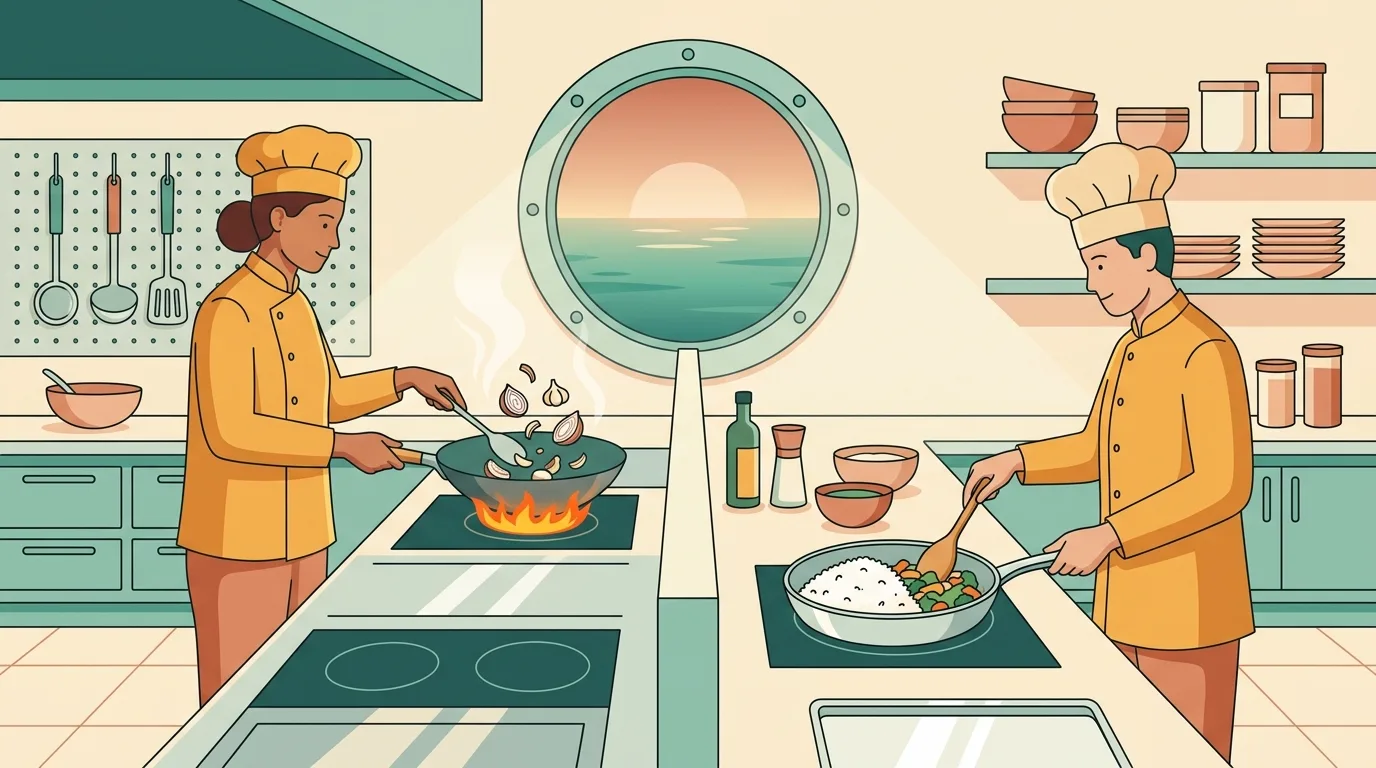
A cruise operator telling you "yes, we do Jain food" answers one question and leaves the more important one open: does the kitchen that cooks it actually keep it separate from everything else? A dish can be technically Jain, with no onion, no garlic, no root vegetables. It can still have touched a pan that had garlic in it twenty minutes earlier, or been finished with an oil that was also used to fry something with onion. The label on the menu doesn't tell you which situation you're in. The questions in this guide do.
Key Takeaways
- "We do Jain food" and "we prevent cross-contamination" are two different claims; most operators only confirm the first when asked casually.
- The specific failure points are shared pans and woks, shared cooking oil, and stock or bases made with onion/garlic as a starting ingredient even when the finished dish looks plain.
- A useful answer names the mechanism (separate pan, separate oil, prep timing). A reassuring-but-vague answer just repeats "don't worry."
- This is deeper, more technical territory than our main Jain food guide: read that first if you haven't already, and come here when you're ready to actually verify a specific booking.
Why "Jain-Friendly" on the Menu Doesn't Settle This
Most Halong Bay cruise kitchens are set up to cook Vietnamese and general international food, with Indian or Jain dishes added as a special request rather than run through a dedicated line. That's not a criticism of the operators: it's just the physical reality of a working galley on a boat, where space, staff, and equipment are all more constrained than in a land-based restaurant. A single wok gets reused for dozens of dishes over the course of a meal service. A single bottle of oil gets used across the whole menu unless someone specifically sets a second one aside. None of that shows up in a booking confirmation that says "Jain meal arranged."
This is different from an intentional mistake. No kitchen is trying to serve you onion when you asked for none. The risk is procedural: a busy line cook, working from muscle memory, uses the pan that's closest and cleanest-looking rather than the one that's never touched garlic. For most travelers, that risk is negligible. For a Jain traveler, where the dietary rule isn't about taste or preference but about avoiding specific ingredients entirely, it's the whole ballgame.
The Three Places Cross-Contamination Actually Happens
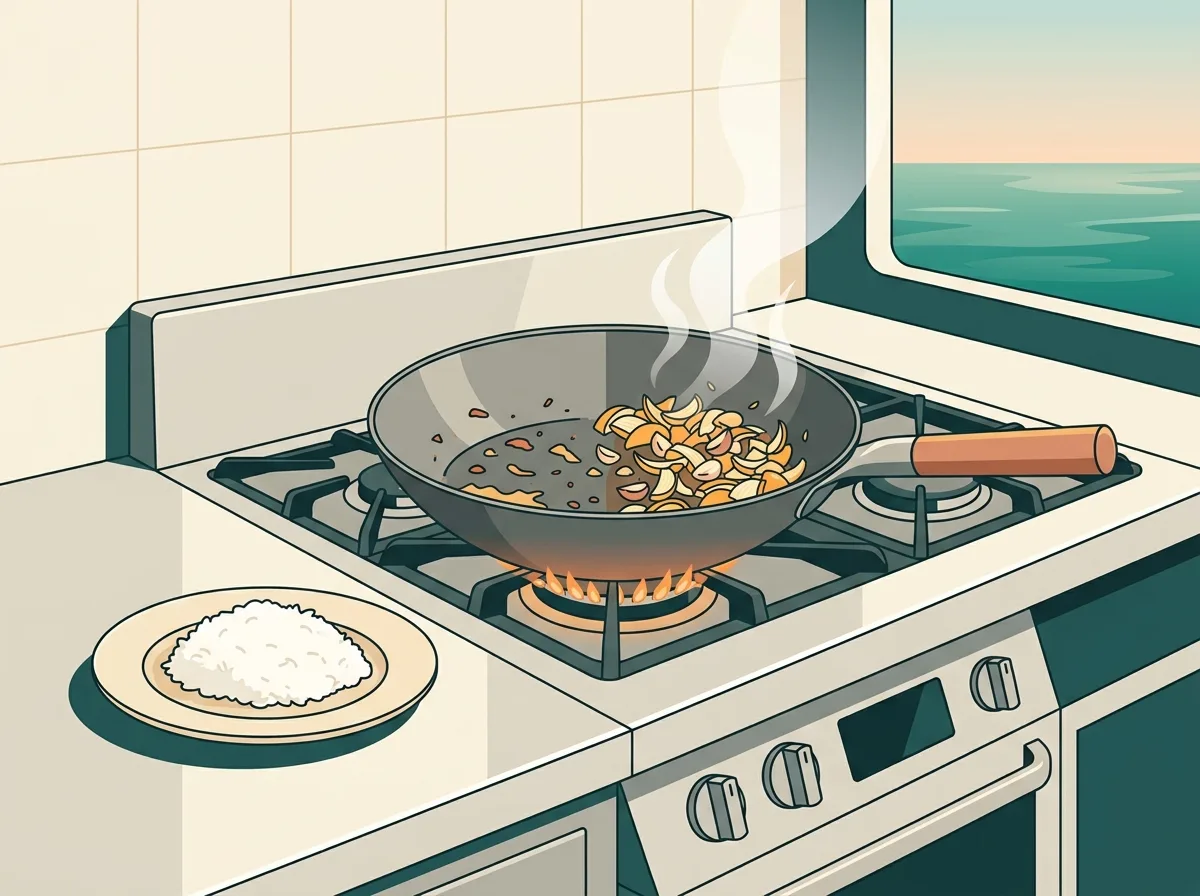
Shared pans and woks. A wok that fried garlic-and-onion Vietnamese greens ten minutes ago, wiped down and reused for your "Jain" stir-fry, has almost certainly transferred some residue; garlic oil doesn't fully disappear with a quick rinse in a galley that's moving through a dinner service fast. Ask specifically whether Jain dishes are cooked in a pan that hasn't touched onion or garlic that day, not just "a clean pan."
Shared cooking oil. This is the one travelers ask about least and it matters the most. A shared oil drum or bottle that's been used to fry onions absorbs some of that flavor. More relevantly for a strict Jain diet, it's no longer neutral. A kitchen that's actually set up for Jain requests keeps a separate oil container specifically for that purpose. A kitchen that isn't will use the same oil for everything, because from a food-safety standpoint there's no reason not to: the concern is dietary, not hygienic, and it's easy for a kitchen that's never fielded this exact question to not think of it.
Stock, bases, and "invisible" ingredients. This is the subtlest failure point. Dal, curries, and many Indian-style dishes start from a base (a tempering, a stock, a pre-made sauce) that may have been built with onion and garlic even if the final dish you're served has neither visibly in it. A kitchen making a fresh, Jain-specific base from scratch is doing real extra work; a kitchen quietly starting from its standard base and adjusting the finish is not, and the dish will look and taste indistinguishable from the outside.
Questions That Get a Real Answer vs. a Reassurance
The difference between a useful response and an empty one usually comes down to whether the person answering names a specific mechanism or just repeats the promise back to you.
Useful, specific answers sound like:
- "We keep a separate pan for Jain and vegetarian orders, used only for those dishes during the meal service."
- "We use a separate bottle of oil for Jain requests, kept apart from the main kitchen oil."
- "The dal/curry base for Jain orders is made fresh without onion or garlic, not from the regular stock."
- "Your request is written into the kitchen's meal list, not just noted by the booking agent."
Vague, reassurance-only answers sound like:
- "Don't worry, we'll take care of it."
- "Yes, of course, no problem" (with no mechanism named when asked a follow-up).
- "Our chef is very experienced with Indian food" (experience with Indian food generally doesn't confirm Jain-specific cross-contamination awareness).
If you ask a direct cross-contamination question and get a reassurance-only answer, that's not proof the kitchen will get it wrong; plenty of kitchens do this correctly without being able to articulate it in these exact terms. But it does mean you don't yet have a verified answer, and asking a second, more specific follow-up (or asking to have the answer confirmed in writing) is a reasonable next step rather than an overreaction.
What a Genuinely Set-Up Kitchen Looks Like
Operationally, a cruise kitchen that has actually thought about this has a few recognizable features: a specific person (often the head chef, not a general server or booking agent) who owns dietary requests directly; a habit of confirming the request again close to the sailing date, not just once at booking, and, per our operator roundup, in the strongest cases, a cook or kitchen line specifically dedicated to Indian food rather than a single Vietnamese kitchen doing double duty. That last point is the clearest single signal: a cruise where Indian/Jain cooking is a parallel, dedicated operation structurally has fewer opportunities for a shared pan or shared oil to cross paths with your order, compared to one kitchen handling everything.
None of this is something you can verify from a listing page. It comes out in a direct conversation, ideally with the operator rather than a general booking platform, and ideally close enough to your travel date that the answer reflects current kitchen staffing rather than a policy from a year ago.
A Request Script That Surfaces a Real Answer
Adapting the general request format from our advance-notice guide, a cross-contamination-specific version looks like this:
"We need Jain meals for [number] people: no onion, garlic, or root vegetables. Beyond the ingredients themselves, can you confirm: will these be cooked in a pan and with oil that haven't been used for onion or garlic that day? And is the dal/curry base made fresh for our order, or from a shared stock?"
A specific answer to both parts is a strong signal. A response that only addresses the ingredient list and not the cooking-mechanism questions is worth a polite follow-up before you rely on it.
Conclusion
Cross-contamination is the detail that separates a Jain request that's technically fulfilled from one that's actually reliable, and it's almost never volunteered: you have to ask for it directly, in specific terms, and ideally get the answer in writing. Start with our main Jain food guide if you haven't already for the broader picture, use the notice-period guide to time your request correctly, and bring the request script above to whichever operator you're booking with. If you'd like to verify any claim on this page directly, you can also contact the editorial team.