Real Menu: What an Indian Vegetarian Thali Looks Like on an Overnight Halong Bay Cruise

Before you book, it helps to know what actually shows up on the plate, not the marketing phrase "Indian vegetarian food available," but the specific dishes. This guide is built from what Halong Bay cruise operators publicly describe or list for their Indian vegetarian menus, compiled into a realistic picture of a typical thali. It is not a first-hand account of a specific meal on a specific cruise: this site hasn't independently verified a served plate yet, and says so plainly rather than implying otherwise.
TL;DR: Across the operators that publish menu detail, a small set of dishes shows up again and again: dal (lentil curry), steamed rice, roti or chapati, a dry vegetable sabzi, and plain curd. That's the realistic baseline for a pure-vegetarian thali on most Halong Bay cruises, closer to home-style Indian food than restaurant-style variety. Anything beyond that baseline (paneer dishes, multiple sabzis, dessert) is a mark of a kitchen doing more than the minimum, and worth asking about directly rather than assuming.
What "Thali" Actually Means Here
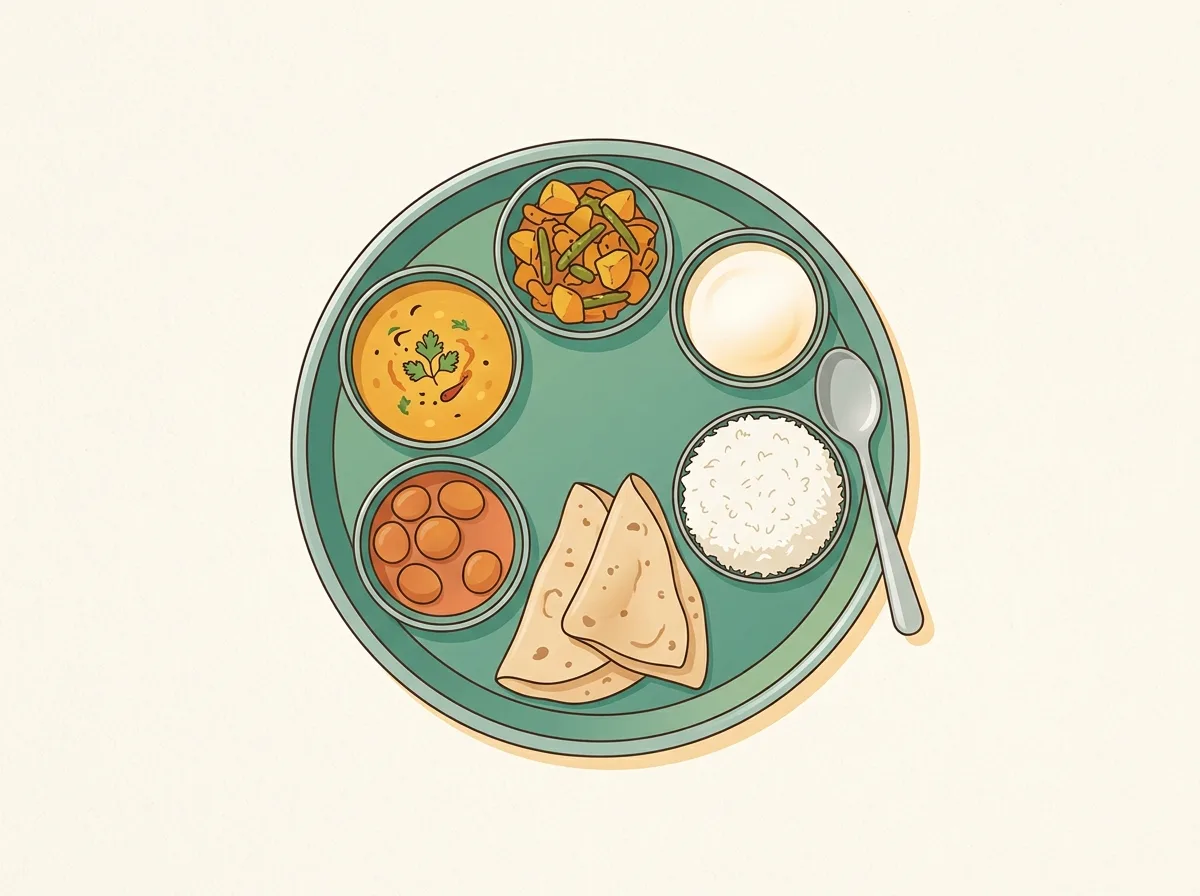
A thali is a plate or tray with several small dishes served together: traditionally in Indian dining, a mix of a lentil preparation, a vegetable dish, bread, rice, and a yogurt-based side, portioned for one person. On a Halong Bay cruise, the term gets used loosely: some operators serve an actual compartmentalized thali plate, others just plate the same dishes separately on a regular setting. Either way, what matters more than the format is which dishes are actually on it.
The Realistic Baseline: What Shows Up Most Often
Based on the operator menus and listings researched for this cluster, five items recur across multiple sources:
- Dal: a lentil curry, usually the anchor of the plate. The most consistently mentioned dish across every operator with any published Indian-food detail.
- Steamed rice: plain white rice, near-universal.
- Roti or chapati: flatbread, sometimes offered as an alternative to rice rather than alongside it.
- A dry vegetable sabzi: a spiced, non-gravy vegetable preparation. Which vegetable varies and isn't usually specified in advance.
- Plain curd (yogurt): offered as a side, both for flavor and as a cooling counterpart to spiced food.
That's the baseline a "pure vegetarian" request should realistically get on most operators that claim any Indian-food capability. It's simple, home-style food, not a restaurant tasting menu, and travelers expecting broad variety every meal on a multi-day cruise should calibrate accordingly.
What a Kitchen Doing More Than the Minimum Adds
Operators with a genuinely dedicated Indian kitchen sometimes go beyond the baseline. The kind covered in our roundup of cruises with an onboard Indian cook may add a paneer-based dish (paneer butter masala or a simpler paneer sabzi), a second vegetable preparation for variety across meals, or a simple dessert like kheer or gulab jamun. None of this is standard, and a listing that promises it should be asked to confirm specifically rather than assumed from a general "Indian food available" claim. That's the same verification principle that applies to every claim in this cluster.
| Baseline (most operators) | Beyond the minimum (dedicated kitchens) | |
|---|---|---|
| Lentil dish | Dal | Dal, sometimes two varieties |
| Bread/rice | Roti or chapati, steamed rice | Same, plus occasional pulao |
| Vegetable | One dry sabzi | A second sabzi or a paneer dish |
| Side | Plain curd | Curd, sometimes a pickle or papad |
| Dessert | Not typically mentioned | Kheer or gulab jamun on some menus |
Breakfast Is Usually Thinner Than Lunch or Dinner
Across the researched menus, breakfast gets less specific description than lunch or dinner. Where it's mentioned at all, it tends toward simpler items: toast, eggs (if your vegetarian definition allows them; see our pure veg vs Jain vs vegan guide for why that distinction matters), or a continental spread with limited Indian-specific options. If a substantial Indian breakfast matters to you, that's worth asking about explicitly and separately from your main-meal request; don't assume dinner-level effort carries through to breakfast.
What This Doesn't Tell You
This compiled picture has real limits, and being upfront about them matters more here than almost anywhere else in this cluster:
- It's aggregated across operators, not a description of any one specific cruise's actual plate on a specific day. Portion, freshness, and exact execution vary by vessel and by the individual chef on duty.
- It's built from what operators choose to publish, which skews toward the more confident, more detailed listings; a kitchen that's actually weaker on Indian food may simply publish less detail, not necessarily serve less food.
- It doesn't cover Jain-specific adjustments. A Jain thali needs the onion/garlic/root-vegetable exclusions covered in our Jain food guide applied on top of this baseline: the dal, sabzi, and any gravy dishes all need to be checked against that list separately.
How to Use This Before You Book
Rather than assuming this baseline applies to your specific cruise, use it as a benchmark for the conversation: ask your chosen operator to confirm which of these five dishes they can guarantee, whether there's anything beyond the baseline, and whether breakfast gets the same attention as dinner. A specific, dish-by-dish answer is a good sign. A response that just repeats "yes, Indian vegetarian food available" without naming anything is worth a follow-up; see our independent guide to choosing the right cruise for how to evaluate that kind of response before you commit. If you spot a menu detail here that doesn't match what an operator actually serves, contact the editorial team so this page can be corrected.
Conclusion
The realistic baseline for an Indian vegetarian thali on most Halong Bay cruises is simple, home-style food (dal, rice, roti, a dry sabzi, and curd), not restaurant-style variety, and that's worth knowing before you set expectations. For the vegetarian and Jain distinctions that change what belongs on this plate, see our full vegetarian and Jain food guide; for which specific operators run a genuinely dedicated Indian kitchen capable of going beyond this baseline, see our Indian cook roundup.