Jain Food on Halong Bay Cruise: What Kitchens Can (and Can't) Guarantee
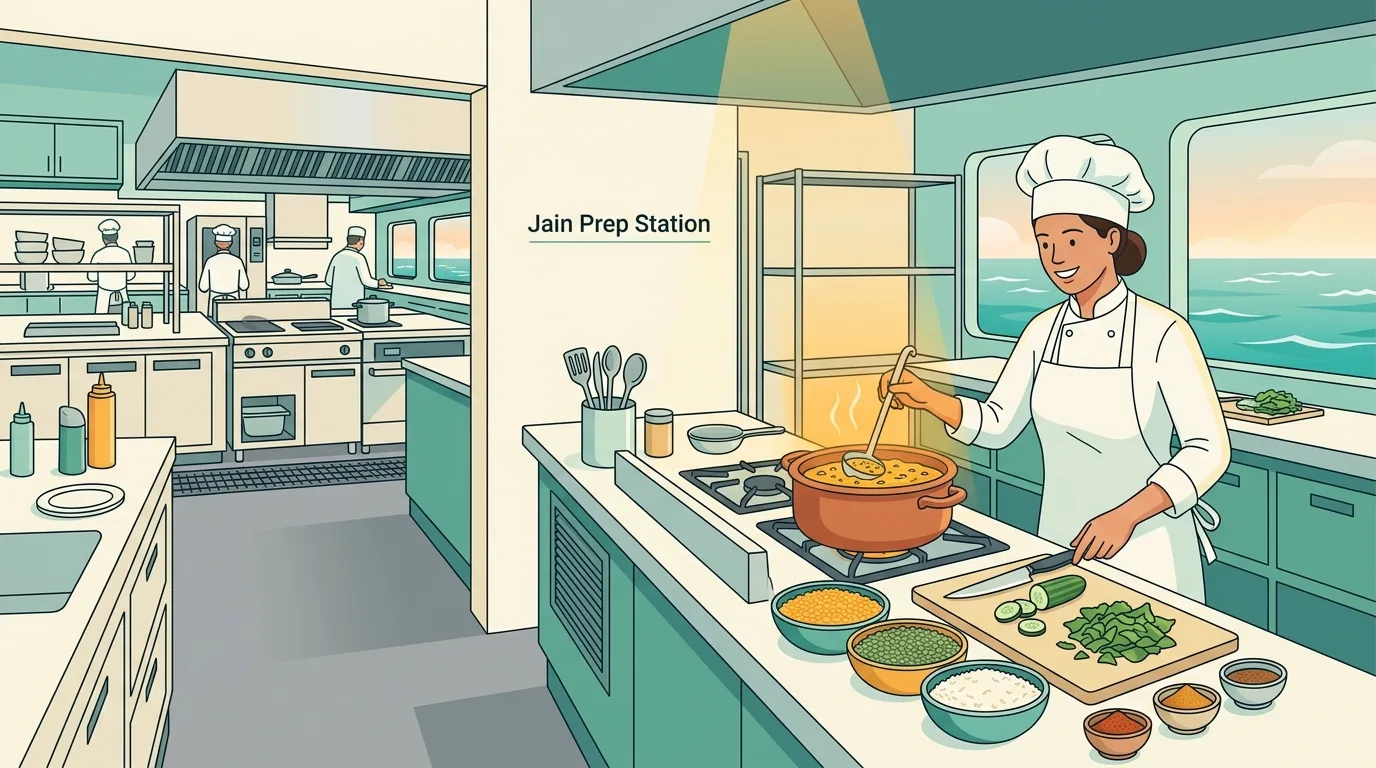
A cruise operator telling you "yes, we can do Jain" is not the same as a cruise operator that can actually do Jain. The gap between those two things is exactly where most disappointed Jain travelers end up. Nobody lied to them; it's just that "Jain" gets treated as a stricter flavor of vegetarian rather than a genuinely different set of kitchen rules.
TL;DR: Genuine Jain food means no onion, no garlic, and no root vegetables, not just "no meat." A kitchen that hasn't cooked Jain before may not know this, and a vague "yes, vegetarian is fine" answer from a booking agent doesn't confirm it. Ask specifically about ingredients and utensils, and get the answer in writing. Give more notice than you would for standard vegetarian: one published example from a Halong Bay operator states roughly two weeks for Jain versus about a week for standard vegetarian, though this varies by operator.
What Jain Food Actually Excludes
Jain dietary practice goes further than pure vegetarianism. Beyond no meat, fish, or egg, it excludes onion and garlic, and root vegetables: potato, carrot, beetroot, radish, and similar, because harvesting them is considered to harm the plant. Some observant Jains also avoid eating after sunset, though that's a personal practice a cruise kitchen has no way to accommodate on its own schedule.
This matters because a Vietnamese or general "international" kitchen that's never cooked Jain food may not know onion and garlic need to disappear entirely. That means not just from the visible dish, but from the base masala, the stock, and any pre-made sauce the kitchen already has on hand. A curry made with a standard onion-garlic base and then simply not garnished with raw onion is not Jain, even though it might get served as if it were.
The Difference Between "Can Accommodate" and "Can Guarantee"
Most Halong Bay cruise kitchens can put together a plate without visible onion or garlic if you ask. Far fewer can guarantee the deeper requirements a strict Jain traveler actually needs:
- A base masala or curry paste made without onion and garlic, not a standard one with onion and garlic simply left out of the final plating.
- No root vegetables anywhere in the dish, including small amounts used for texture or sweetness in a sauce.
- Separate utensils, pans, and cutting boards for Jain preparation, so the dish isn't cooked in the same pan that just had garlic-based curry in it.
- A kitchen staff member who actually understands why these rules exist, rather than someone following a checklist without knowing what happens if a step gets skipped.
The first is common. The second and third are where most operators start to struggle, simply because it means running what's effectively a separate small prep line rather than modifying an existing dish. The fourth is the hardest to verify from outside, but it's often the difference between a kitchen that gets it right consistently and one that gets it right the first time and slips on day two of a multi-day cruise.
Our roundup of which cruises have a genuine onboard Indian cook is a reasonable starting point for narrowing down operators likely to have this kind of dedicated setup, since a kitchen already built around Indian cooking is more likely to understand Jain requirements than one adding a single accommodated dish.
How Much Notice You Actually Need
Notice-period requirements are one of the more concrete, checkable things you can ask about before booking, and they scale with how strict the requirement is. One Halong Bay cruise operator's own published guidance states a standard vegetarian request needs about a week's notice, while a Jain request needs roughly two weeks, because it requires more kitchen-side preparation (Halong Bay Lux Cruises, retrieved 2026-09-23). Treat that specific timeline as illustrative of typical practice in this niche rather than a universal rule: the actual number varies by operator, kitchen size, and how far in advance they need to source separate ingredients. Confirm the real window directly with whichever cruise you're considering; see our guide to advance-notice requirements for more on how this works across different operators.
Booking last-minute and hoping the kitchen can improvise Jain food on the day is a real risk on an overnight cruise specifically, because there's no way to leave the boat if the meal doesn't work out.
How to Word Your Request So You Get a Useful Answer
A vague request gets a vague answer. Something like this gives the kitchen enough to actually plan around, and gives you something specific to hold them to:
"We need Jain food for [number] people on [dates]: no onion, garlic, or root vegetables (potato, carrot, beetroot) in any dish, including the base curry or masala. Please confirm whether this will be prepared using separate utensils and pans from non-Jain dishes, and let us know what specific dishes you'll be able to serve."
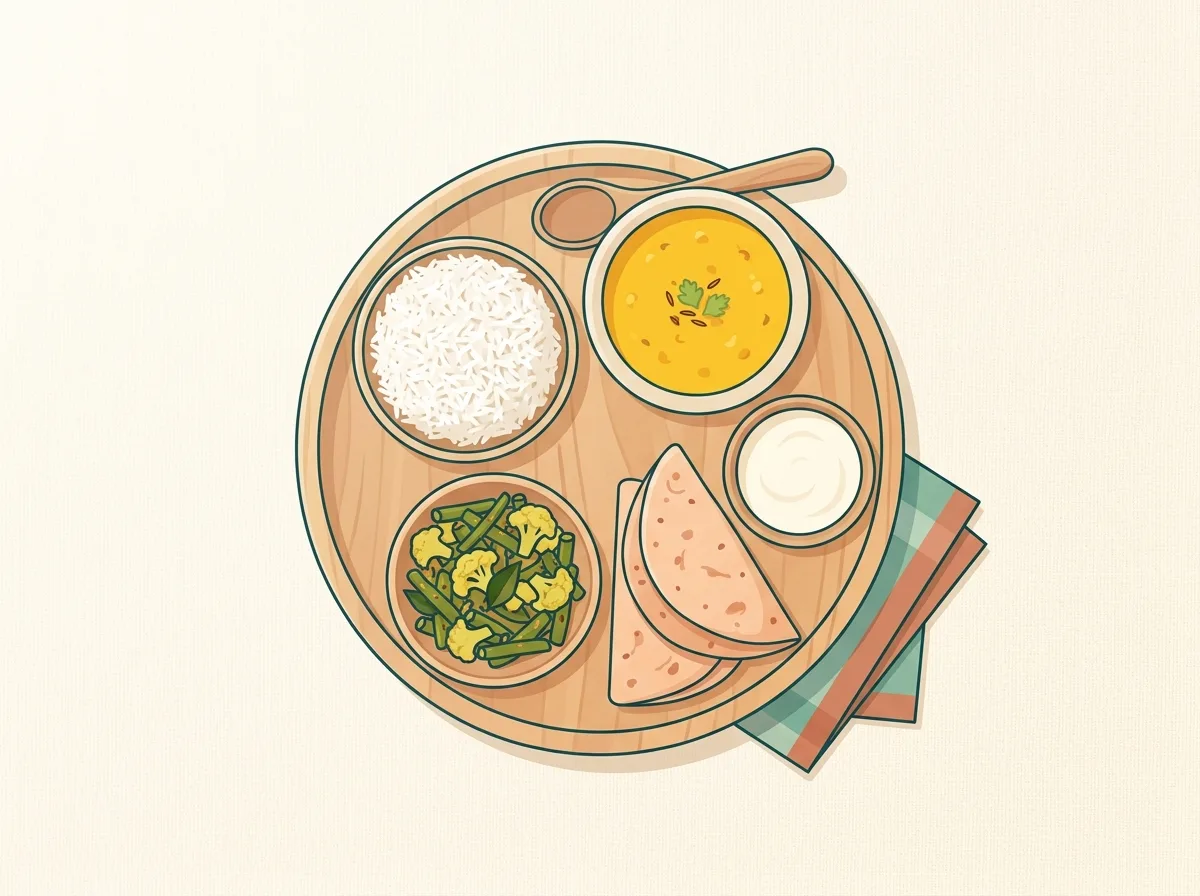
A useful reply names specific dishes (dal made without onion-garlic tempering, plain rice, roti or chapati, a dry vegetable sabzi using only non-root vegetables, plain curd) and directly answers the utensil question. A reply that just says "yes, we can arrange Jain food" without naming dishes or addressing utensils is worth a follow-up before you rely on it.
Red Flags Worth Watching For
- The reply doesn't mention utensils at all, even after you've asked directly. Silence on that specific point is often silence because the kitchen hasn't thought about it.
- The kitchen offers to "just remove the onion and garlic" from an existing dish rather than describing a separate preparation. This usually means the base was already cooked with them.
- No specific dishes are named. "We can do vegetarian and Jain food" without any menu detail is a statement of intent, not a plan.
- The confirmation only exists as a verbal assurance from a booking agent, not written into your booking confirmation or a follow-up email. Get it in writing: see our guide on booking mistakes to avoid for more on why this matters specifically for Jain and vegetarian requests.
Conclusion
Genuine Jain food on a Halong Bay cruise is achievable, but it depends on a kitchen that understands the difference between "no onion and garlic on the plate" and "no onion and garlic anywhere in the preparation," including shared pans and pre-made sauces. Ask specifically, ask early, and get the answer in writing. For the broader picture on vegetarian and Jain options across operators, see our complete vegetarian and Jain food guide, or go straight to what a real onboard thali looks like if you want to see the destination before you plan the request. If you've verified something here that doesn't match what an operator told you, contact the editorial team and let us know.