Pure Veg vs Jain vs Vegan on a Halong Bay Cruise: The Practical Differences
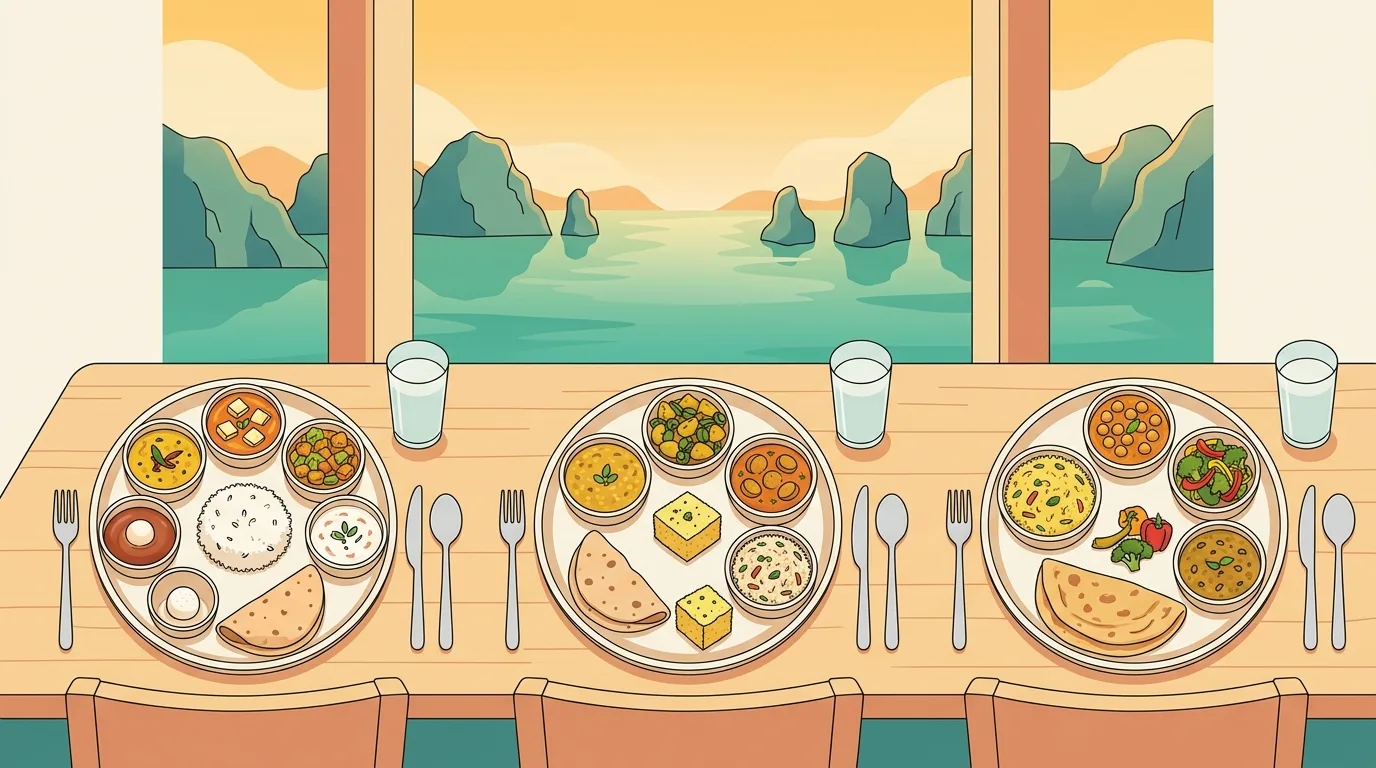
"Vegetarian" is not one request. If you tell a Halong Bay cruise operator you're vegetarian without saying more, you'll usually get food you can eat, but "usually" isn't good enough when you're on a boat you can't leave for two days. Pure vegetarian, Jain, and vegan each exclude a different, specific set of ingredients, and a kitchen that hasn't cooked for Indian travelers before may not know the difference exists at all.
TL;DR: Pure vegetarian excludes meat, fish, and egg but allows dairy. Jain excludes all of that plus onion, garlic, and root vegetables. Vegan excludes all animal products entirely, including dairy and honey. The three overlap heavily but aren't interchangeable: a kitchen that confirms "vegetarian, no problem" hasn't necessarily confirmed Jain or vegan, and assuming otherwise is where mismatched meals happen. Word your request with the specific exclusions, not just the label.
Quick Comparison
| Meat/Fish | Egg | Dairy | Onion/Garlic | Root Vegetables | Honey | |
|---|---|---|---|---|---|---|
| Pure Vegetarian | Excluded | Excluded | Allowed | Allowed | Allowed | Allowed |
| Jain | Excluded | Excluded | Allowed | Excluded | Excluded | Usually excluded |
| Vegan | Excluded | Excluded | Excluded | Allowed | Allowed | Usually excluded |
Read that table as a starting point, not a universal standard; individual practice varies within each category, especially for Jain travelers, where strictness differs by family and region of India. If you have a specific line you don't cross, say so explicitly rather than relying on the label alone.
Pure Vegetarian: What It Actually Excludes
In the Indian sense, pure vegetarian means no meat, no fish, and no egg. Dairy (milk, ghee, paneer, curd) is fine. This is the most common request a Halong Bay cruise kitchen will encounter from Indian travelers, and most established operators can accommodate it with reasonable notice.
The mismatch risk here is narrower than for Jain or vegan, but it's real: a Western or Vietnamese menu labeled "vegetarian" sometimes still includes egg, since egg-inclusive vegetarianism is the norm in many non-Indian kitchens. If egg is a hard exclusion for you, say "no egg" explicitly rather than assuming "vegetarian" covers it; see our guide to how much notice cruises need for these requests for how to phrase this in your booking message.
Jain: The Stricter, More Specific Request
Jain food starts from pure vegetarian and adds three more exclusions: no onion, no garlic, and no root vegetables (potato, carrot, beetroot, radish, and similar), because they're considered to involve harm to the plant when harvested. Some practicing Jains also avoid honey and certain other ingredients; if that applies to you, state it directly rather than assuming the kitchen will infer it from the word "Jain."
This is the request most likely to go wrong on a Halong Bay cruise, for a specific reason: onion and garlic are foundational to most Vietnamese and Indian cooking bases. A kitchen that hasn't cooked Jain food before may not realize the risk here. Removing the whole onion but leaving garlic-infused oil in the pan, or serving a dish that's otherwise Jain-compliant but garnished with a potato-based side, still breaks the requirement. Our guide to what kitchens can and can't guarantee for Jain food goes deeper on this, and our cross-contamination guide covers the utensil and shared-pan questions worth asking directly.
A request that gets a useful response looks like this: "We need Jain food: no onion, no garlic, no potato, carrot, or other root vegetables, and please confirm these will be prepared with separate utensils." A kitchen that responds with specific dish names (dal without onion-garlic tempering, plain rice, roti, a root-vegetable-free sabzi) has understood the request. A kitchen that just says "yes, vegetarian is fine" has not.
Vegan: Fewer Autocomplete Searches, Same Real Need
There isn't much dedicated search volume for "vegan Halong Bay cruise" specifically; most vegan Indian travelers researching this trip search using the broader vegetarian terms and then clarify dairy exclusions once they're actually communicating with an operator. That doesn't mean the need isn't real, just that it's usually handled as a variant of the vegetarian conversation rather than its own search category.
Vegan excludes everything pure vegetarian does, plus all dairy (milk, ghee, paneer, curd, butter) and typically honey. If you're stopping in Hanoi before or after the cruise, our vegetarian restaurant leads cover a couple of on-land options too. This is where assumptions go wrong most often for vegan travelers: a dish confirmed "vegetarian" by an Indian-food-aware kitchen may still contain ghee as a default cooking fat, since ghee is a staple in Indian vegetarian cooking and often isn't mentioned as an "ingredient" the way meat would be. If you're vegan, say "no dairy, no ghee, no butter" explicitly; don't rely on "vegan" alone being understood the same way "vegetarian" is.
Why the Difference Actually Matters on an Overnight Cruise
A day cruise gets one meal to verify; if a pure-vegetarian request comes back with egg in it, you can flag it and move on. An overnight cruise doesn't give you that flexibility: you're eating whatever the kitchen prepared for two or three meals in a row, on a boat you can't leave to find an alternative. That's the specific reason the exact wording of your request matters more here than it would on a typical restaurant visit on land: there's no fallback if the kitchen misunderstood which category you actually need.
This is also why "vegetarian" as a single word undersells the actual complexity for a Jain or vegan traveler. A kitchen genuinely willing to accommodate you might still get it wrong simply because it wasn't told the specific exclusions, not because it's being dishonest, but because "vegetarian" means different things in different culinary contexts, and Vietnamese kitchens cooking primarily for a non-Indian clientele haven't necessarily encountered the Jain or vegan variants before.
How to Word Your Request for Each Category
- Pure vegetarian: "We need pure vegetarian meals: no meat, fish, or egg. Dairy is fine."
- Jain: "We need Jain food: no onion, garlic, or root vegetables (potato, carrot, beetroot), and no meat, fish, or egg. Please confirm separate utensils from non-vegetarian dishes."
- Vegan: "We need vegan meals: no meat, fish, egg, dairy, ghee, or honey."
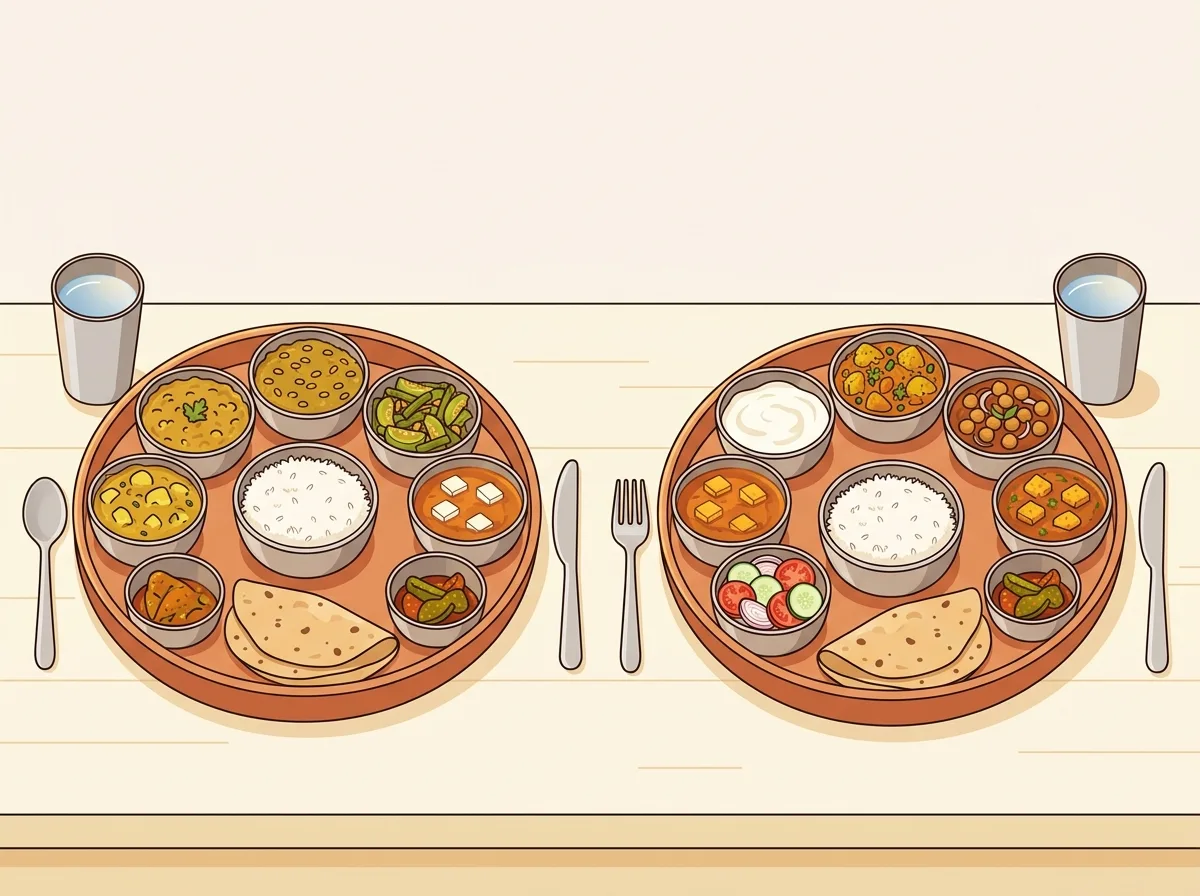
In every case, ask for written confirmation of the specific exclusions, not just an agreement to the label. See our independent guide to choosing the right cruise for how to evaluate an operator's response before you book, and our full guide to vegetarian and Jain food on Halong Bay cruises for the complete picture: notice periods, verified operator claims, and what a real onboard thali looks like.
Conclusion
Pure vegetarian, Jain, and vegan are three different, specific sets of exclusions that happen to overlap on meat and fish: treating them as interchangeable is where mismatched meals happen on a trip where there's no easy fallback. State your exact exclusions when you book, get written confirmation of the specifics rather than just the label, and see our Jain food guide and real onboard thali guide for what to expect once you're actually on board. If you've spotted a claim here that needs a closer look, contact the editorial team.